
Groton's Historical City Directory Shelf
Groton Public Library is the strongest local starting point for historical directories, but its public research page does not publish a complete year-by-year shelf list, publisher key, call number, or sample entry. The page and local-history display reference 1918, 1929, and 1990s material. Those are leads to verify with staff, not a complete run. The table keeps known coverage, custody, and access limits together.
| Collection | Years | Where Held | Access |
|---|---|---|---|
| New London and Groton directories at GPL | 1918, 1929, and 1990s references; full run not published | Groton Public Library Local History Room | In room during library hours; registration and controlled-material rules |
| Regional New London and Norwich directories | Surrounding-town holdings are listed; itemized years are not published | New London County Historical Society | Genealogy access by appointment |
| Mystic runs covering Groton | 1912, 1914-1919, and 1921-1932; New London 1927-1932 also listed | National Archives city-directory inventory | Inventory lead; verify reel, title, and publisher |
| Fitch High School yearbooks, companion source | 1958-present, digitized from the library collection | Groton Public Library research links | Use as a school-history companion, not a directory run |
| Groton History Online | Coverage not established | Official-linked PastPerfect collection | Unavailable during inspection; search fields and item count unknown |
No source supports a clean first-year-to-last-year claim for Groton. GPL does not publish the complete run or a local sample entry. The National Archives list does not identify the publisher for the Mystic runs, and the PastPerfect portal was unavailable. A title page, imprint, and shelf or reel reference should settle those questions before a citation is treated as complete.
Groton City Directories and Separate City Records
“City of Groton” and “Town of Groton” are not interchangeable search labels. The City is an independent subdivision government inside the Town, with its own government and utilities. The Town handles schools, social services, taxes, and vital records. The City Clerk keeps City official records, elections, budgets, charter material, legal notices, and board records. A name in a city directory therefore needs its original place label preserved, especially when it says Groton Bank, Groton Heights, Mystic, Noank, or Groton Long Point.
The Groton Town Guide is a useful office crosswalk, while the City and Town explanation describes the jurisdiction split. For City government material, use the City Archive search, which presents Archive, Keywords, Time Period, Date Range Start, Date Range End, and Search controls. Its results include annual reports, minutes, applications, and Planning or Public Works records. If a needed City record is not online, the City Clerk page directs written Freedom of Information requests (FOI) by email to FOI@cityofgroton-ct.gov or in person. Keep the requested date range and ask about format and fees.
Myth check. New London County is a geographic and judicial reference, not the office that holds Groton land records. A historical directory or City archive result should not be sent to a nonexistent county recorder.
Groton Library and Regional Directory Holdings
The Groton Public Library Local History Room is open during regular library hours. Check in at the Information Desk, complete the registration form, and leave a driver's license while using controlled material. Materials normally remain in the room unless a librarian grants permission. The James L. Streeter collection adds photographs, maps, government documents, and local ephemera. The library lists Monday through Thursday 9-9, Friday 9-5:30, Saturday 9-5, and Sunday closed, but another directory displayed a different Sunday schedule, so verify hours before travel.
The Groton Public Library local-history page gives the clearest public description of the room, its directories, newspapers, family histories, yearbooks, catalog, and linked research tools.
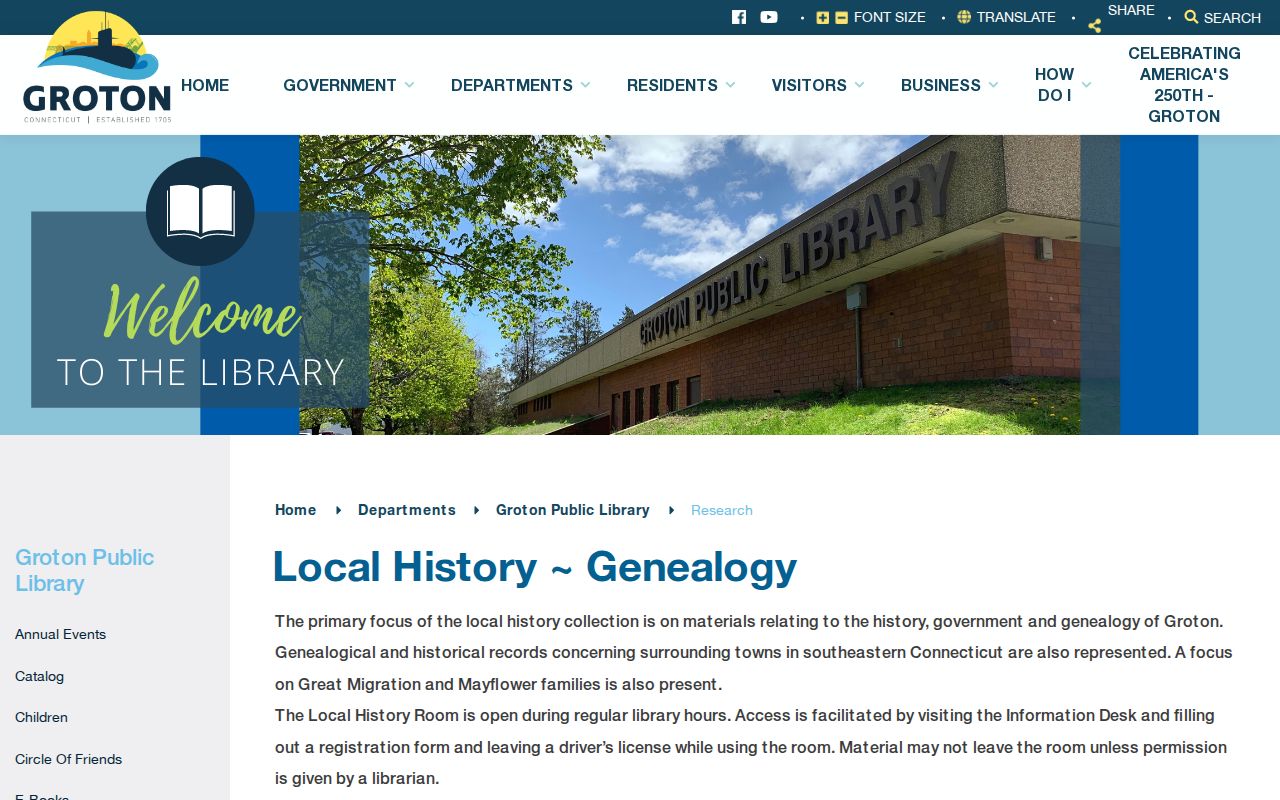
The library capture confirms a broad local-history gateway, but it does not expose a complete directory run or a named sample entry. Ask staff for the title page, publisher, geographic scope, and abbreviation key before copying a record.
For a wider New London County search, the Historical Society lists family histories, WPA headstone notebooks for every county town, newspaper marriage and death indexes for 1758-1866, newspapers from 1758-1904, directories that include surrounding towns, maps with property owners, manuscripts, family Bibles, photographs, school publications, and local histories. Genealogy access is by appointment at 860-443-1209. The public page does not publish complete hours, reproduction fees, or an item-level surname index.
The New London County Historical Society genealogy collection is therefore a regional companion, not a county land-record office. Its directory result should retain the town, publication date, page, and original spelling.
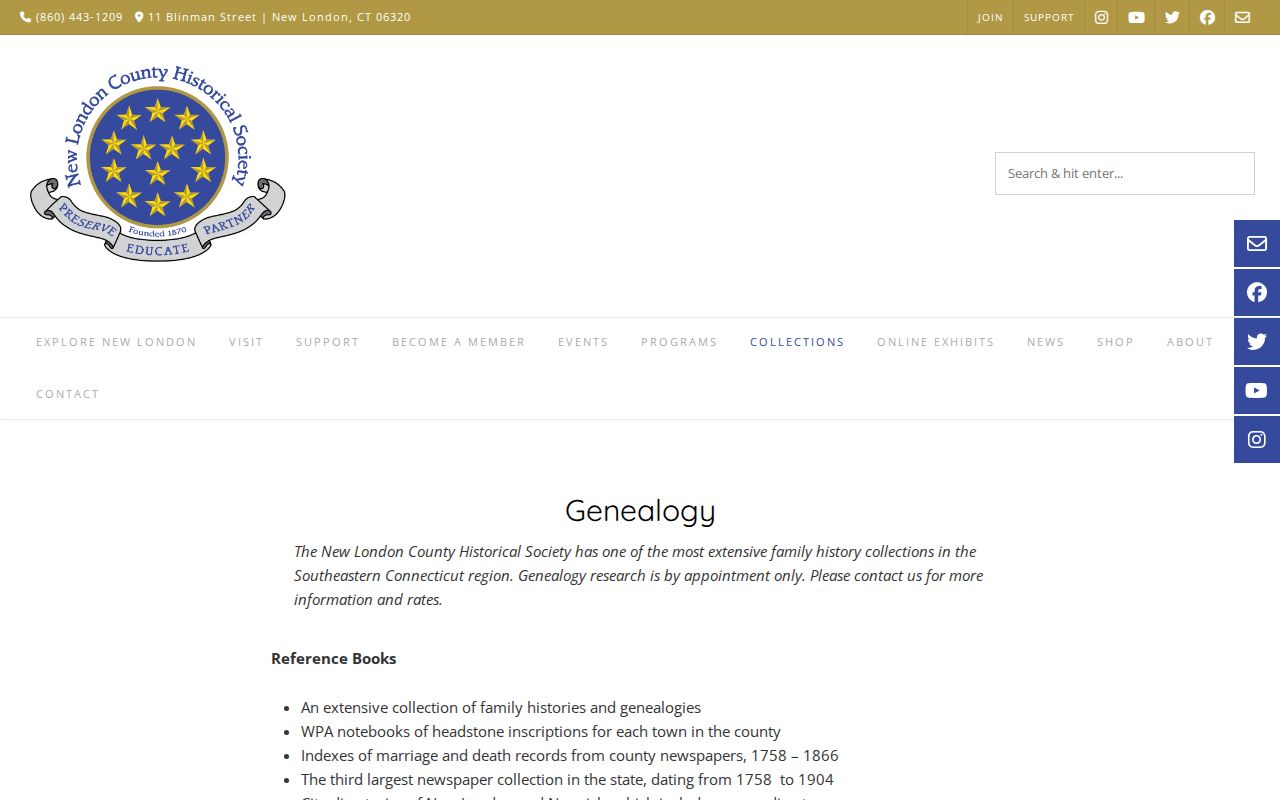
The historical-society image represents the holdings gateway. It does not establish that a particular Groton surname or parcel is indexed online.
Digitized Groton Historical Directory Clues
Digital access is useful, but it has visible gaps. The official-linked Groton History Online collection returned an unavailable response during the August 20, 2026 inspection. No coverage date, item count, search facet, or sample entry can be claimed from that visit.
It should not be described as a working, complete digital city-directory run. Ask the library whether a catalog record, alternate viewer, or Local History Room copy supplies the item when the portal fails.
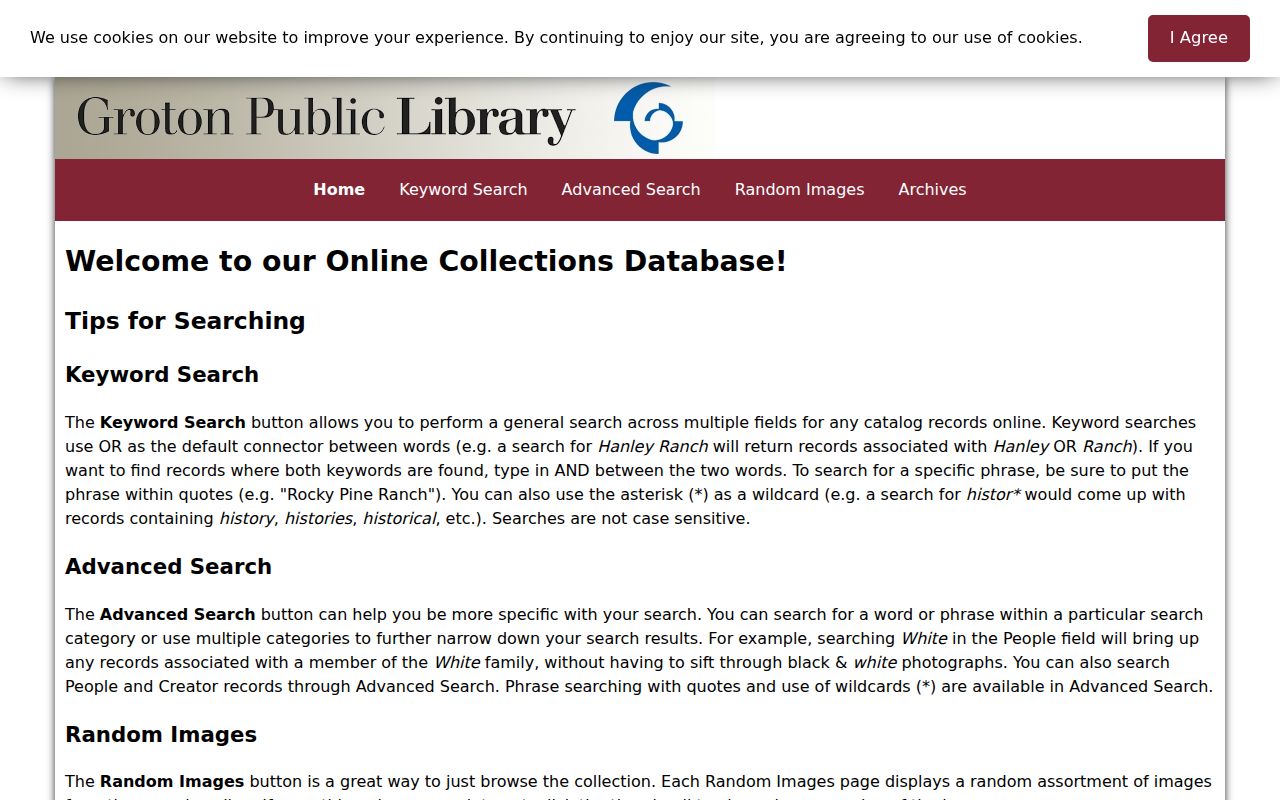
The image records the PastPerfect access gap rather than a directory result. That distinction prevents an unavailable screen from becoming an invented collection claim.
The Connecticut State Library's 1934 Groton aerial item is a real dated local image. It helps compare roads, shoreline, and development, but it is not proof of ownership or residence.
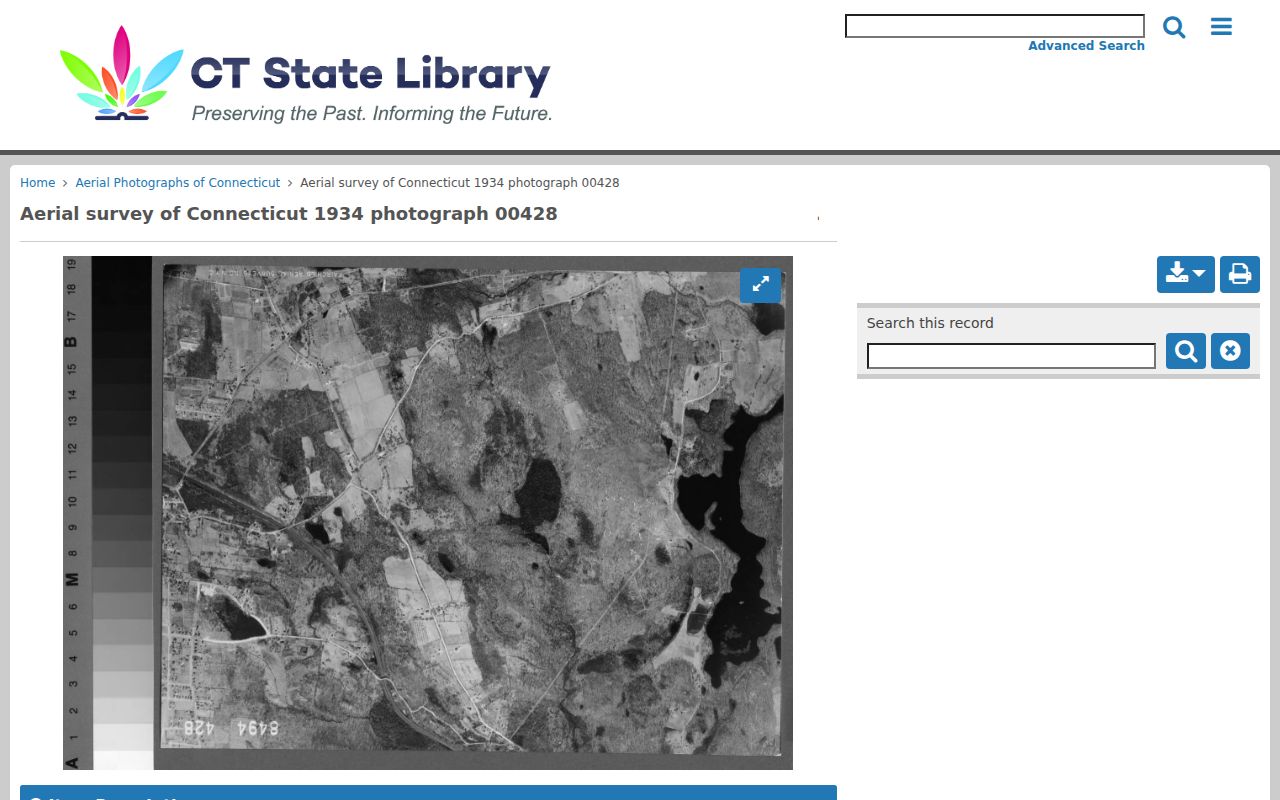
The aerial metadata identifies a Fairchild Aerial Survey and Connecticut Air National Guard image for the State Planning Board, at approximately 1:12,000 scale, digitized in 2004 from RG089. The WPA Architectural Survey adds a 1934-37 house-history trail, while the State Library's newspaper microfilm index supplies title and date clues rather than a guarantee that every issue is online.
| 1912 | NARA inventory lists a Mystic run covering Stonington, Noank, and Groton; title and publisher need verification. |
|---|---|
| 1914-1919 | NARA lists another Mystic run for the same regional coverage; confirm the reel and imprint. |
| 1921-1932 | NARA lists later Mystic coverage; use the inventory as a lead, not a scanned volume. |
| 1934 | State Library aerial item supplies a dated landscape reference, not an ownership record. |
| 1934-1937 | WPA architectural survey range; inspect an exact Groton property card rather than assuming coverage. |
| 1958-present | Fitch High School yearbooks are digitized from the GPL collection as a school-history companion. |
Past Addresses in Groton City Directories
The National Archives 1930 city-directory inventory lists Mystic runs covering Stonington, Noank, and Groton for 1912, 1914-1919, and 1921-1932, plus New London for 1927-1932. The page does not identify the publisher for the Mystic entries. Verify the reel, title, publisher, and place scope before citing a volume as a Groton source.
The Library of Congress city-directory guide describes dated entries that may include a person's name, spouse or household relation, occupation or business descriptor, street address, and telephone when the volume includes it. The format may be alphabetical or street/address order, and runs can be irregular. The LOC criss-cross guide is a method comparison, not proof of a local volume. Its national inventory is mainly 1960s material and requests require a Library reader card, type, location, state, and years.
A reverse-address result is a dated clue. It can place a name at a street address in a particular volume, but it cannot by itself prove current residence, ownership, or the legal identity of a parcel.
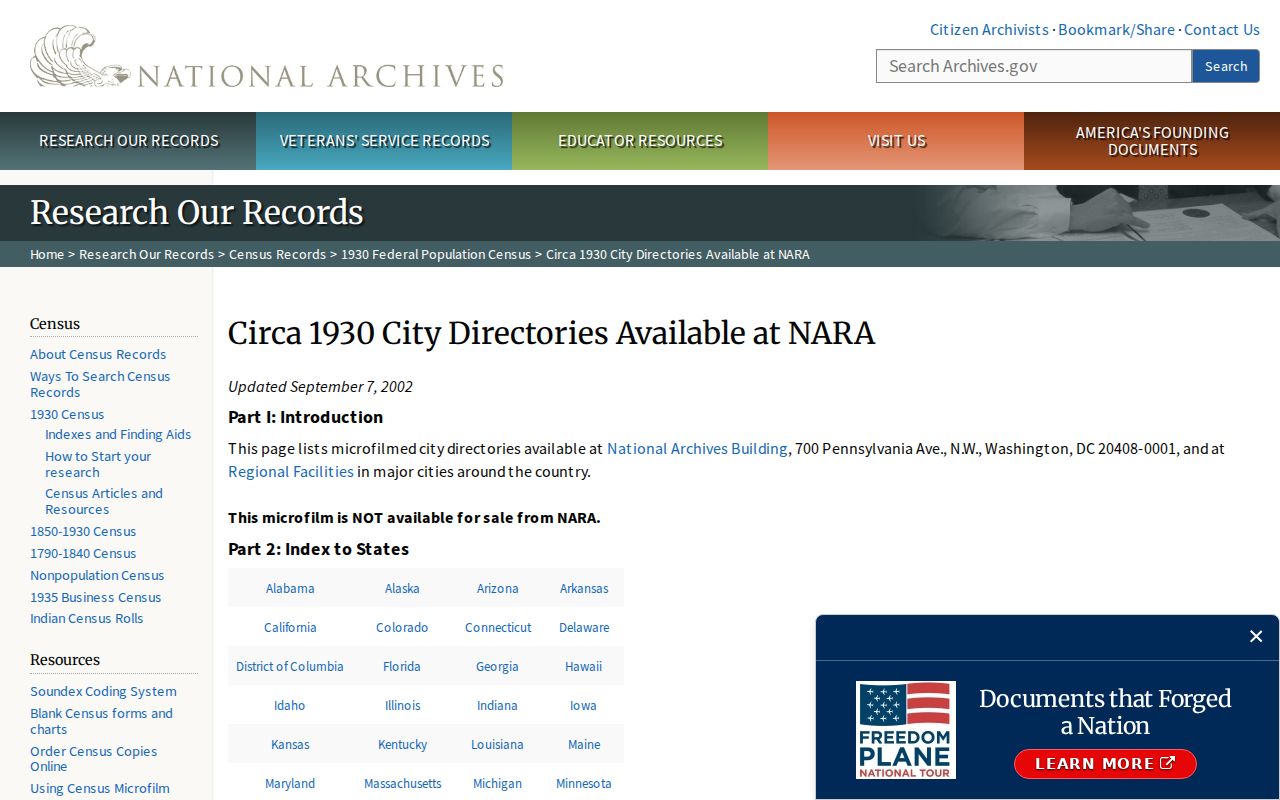
The National Archives image is an inventory view. It reinforces the need to verify the underlying title and publisher before treating the listed Mystic run as a complete Groton directory collection.
Reading a Groton Directory Entry
No local sample entry was publicly rendered during the research inspection. The safe inventory below uses only the fields the Library of Congress guide identifies as possible directory elements. “Where printed” matters because not every volume includes every field, and an entry must be read within its own year, publisher, and geographic scope.
| Person or household name | The name as printed in the volume. |
|---|---|
| Spouse or household relation | Include it only where the directory prints that relation. |
| Occupation or business descriptor | Record the wording only where the entry supplies it. |
| Street address | Preserve the house number and street spelling as printed. |
| Telephone | Capture it only when the volume includes a telephone field. |
| Arrangement | Note whether the volume is alphabetical or street/address organized. |
| Year, publisher, and geographic scope | Use the title or imprint to identify the snapshot before comparing it with another volume. |
Before comparing two entries, copy the volume title, year, publisher, page, and place scope. That short citation keeps an occupation note, address spelling, or household relation tied to the exact snapshot that printed it.
- Criss-cross directory
- A reverse street or house lookup arranged by address rather than only by surname.
- Householder index
- An index centered on the person listed for a household when a volume provides that arrangement.
- Abbreviation key
- The volume's own list of shortened terms. Read it before interpreting an address, occupation, or household note.
Trace a Groton Household Through City Directories
For family history or a dated house question, treat each directory as one snapshot and keep the original page with the citation. A current municipal parcel card can supply a physical address and parcel starting point, but the historical trail comes from dated directories, newspapers, maps, and family material.
- Choose a likely volume year and copy its title, publisher, geographic scope, and page reference before reading the name.
- Search the alphabetical section for name variants, then record the printed relation, occupation or business descriptor, address, and telephone only when shown.
- Use a street or criss-cross section when one exists, comparing the same address and nearby entries without assuming an unlisted household.
- Pair each dated directory result with the nearest available census year. The NARA material is tied to 1930-era directory research, while NLCHS lists early New London census material, so record the exact census year and custodian.
- Check dated newspapers, the NLCHS marriage and death index, cemetery notebooks, WPA material, or a later directory before explaining a disappearance.
Insider tip. An absent name can mean a move, death, an omitted entry, or a change in directory scope. Do not choose one explanation without a second dated source. When the question shifts from a historical household entry to the current parcel chain, use the Groton by-street directory for the address-keyed research path.
For a defensible result, say “appears at this address in year X” unless a separate record supports ownership or another status. Preserve the original spelling of Groton, Mystic, Noank, or another place label, and mark a gap as “not located in the inspected source,” not as proof that a person was never there.
Note: A directory disappearance may reflect a move, death, omission, or changed scope; confirm it with another dated source.
Citing Groton Directory Evidence Carefully
A useful citation keeps the title page, year, publisher, page, original place name, and geographic scope together. State whether the item was seen in the GPL room, supplied through NLCHS, read from a State Library digital item, or identified only in the NARA inventory. GPL's incomplete run, the NLCHS index gap, the unavailable PastPerfect portal, and the unverified Mystic imprint all belong in the note.
Historical directory evidence belongs beside other dated records. It can support a family-history lead or past-address clue, while a parcel card, deed, certified record, or current custodian answers a different question. Keep the source, date, and access route visible for lawful personal research.