
Groton Sources for Previous Residents
A Groton property card can connect a physical address (situs), parcel or account number, owner or care-of field, deed book and page, district, and recent sale line. Online land records start in 1962. The property-information quick start warns that deeds before roughly 1940 are not digitized. These windows differ, so a 1940 through 1961 question needs the clerk to check an index, scan, or paper book. Directories and newspaper indexes add household detail, but each run has its own dates and geography.
| Source | Years It Covers | Where Held | What It Shows |
|---|---|---|---|
| Town Clerk land records and RecordHub | 1962-present online | Groton Town Clerk and RecordHub | Recorded deeds, maps, surveys, and the grantor/grantee trail |
| Groton Public Library directories | Runs not fully inventoried | Local History Room | Dated names, addresses, household clues, and local place names |
| Mystic runs in the 1930 directory inventory | 1912; 1914-1919; 1921-1932 | National Archives inventory | Address and name snapshots for Mystic, Stonington, Noank, and Groton |
| NLCHS newspaper index and holdings | Index 1758-1866; newspapers 1758-1904 | New London County Historical Society | Marriage and death notices, local context, and leads to a household |
| WPA Architectural Survey | 1934-1937 | Connecticut State Library CONTENTdm | Selected building cards, photographs, sketches, and descriptions |
| Groton aerial photograph | 1934 | Connecticut State Library CONTENTdm | Road, shoreline, and pre-development context, not ownership |
| CSS/EnerGov permit records | After July 2023; older may be absent | Groton planning and permit portal | Address-linked permits, plans, inspections, and code cases |
This is a coverage map, not a complete run of Groton names. The library does not publish a directory inventory, publisher key, shelf call number, or sample entry. NLCHS lacks a published schedule, reproduction fee, or item-level surname index. Retain each hit's title, page, image identifier, and place wording.
Set the Groton Target Year
A house-history search gets clearer when two dates stay separate: the source date and the property-card date. A card is a lead into an older record, not a time machine. Save the retrieval date too, because Groton mapping and assessment data, imagery, sketches, and cards refresh on different schedules.
Write the target year at the top of the work note. Record the street form, postal city, parcel or account number, and source page. A Groton card may show a trustee pair, a company with a mailing city elsewhere, or Town and open-space ownership. These entries identify the parcel and next record, but they do not prove who lived there. A deed name may be an owner, seller, or trustee; a directory name may be a household member or dated address listing.
Date rule. Keep the current property-card date beside every older source date. A record from one year cannot silently stand in for another.
Find a Dated Groton Address Entry
The Groton Public Library Local History Room is the strongest local start for a past-resident or house question. Its James L. Streeter collection includes notes, photographs, maps, government documents, letters, and objects. The room lists New London and Groton directories, genealogies, local histories, pamphlet files, and Groton Long Point scrapbooks. Use regular library hours, check in at the Information Desk, complete the registration form, and leave a driver's license while controlled material is in use. Materials normally stay in the room.
A directory entry is a dated snapshot. The Library of Congress says a volume may give a name, spouse, occupation, address, and telephone when printed. It may be alphabetical or address-ordered, with an irregular run. The National Archives inventory lists Mystic volumes covering Stonington, Noank, and Groton for 1912, 1914-1919, and 1921-1932, plus New London volumes for 1927-1932. It does not identify the publisher, so verify the reel, title page, and scope.
The Library of Congress reverse-address guide shows the method used when a surname is uncertain and the street or house number is stronger.
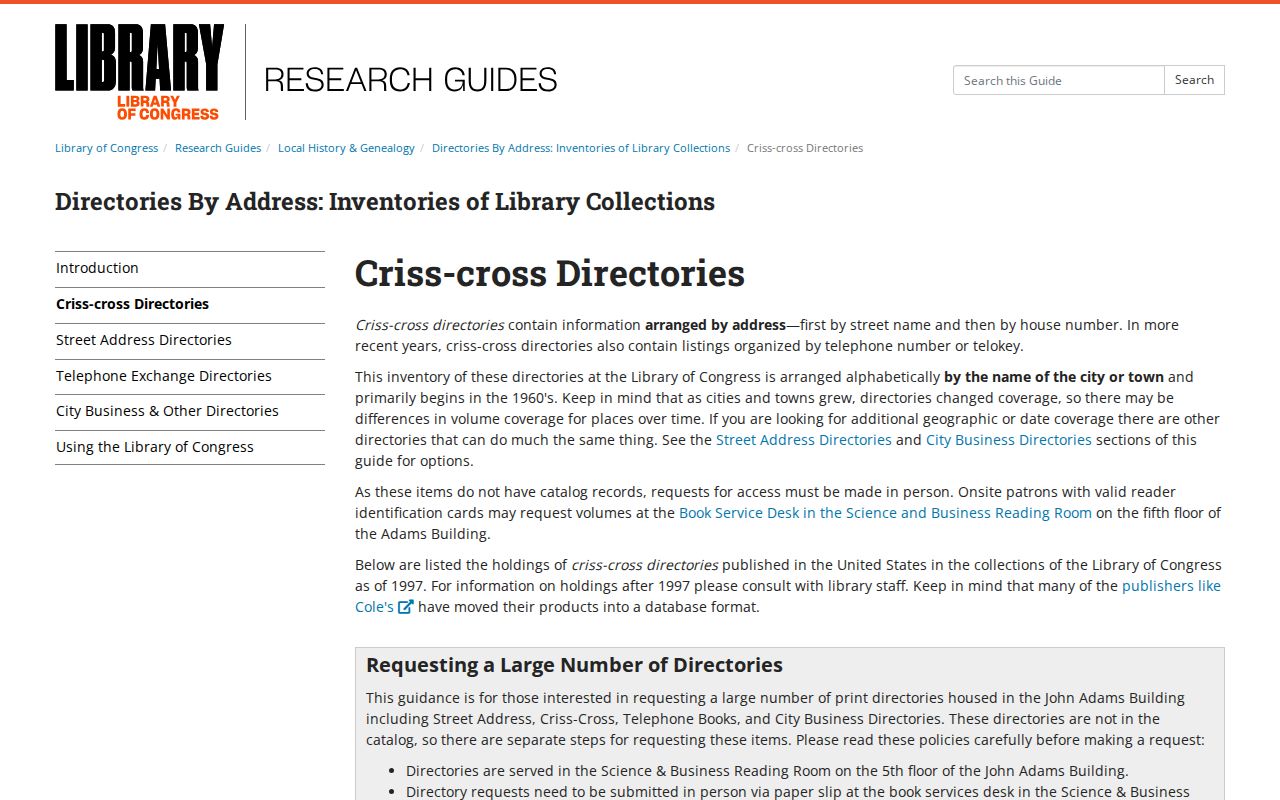
The guide is a method reference, not proof that a matching Groton criss-cross volume exists. Ask staff to confirm the title, years, and page before treating a reverse entry as a local household.
For the shelf itself, use the Groton city directory collections page. The backward trail still needs its own date and address check.
Trace Groton Past Residents Backward
A deed chain is the ownership spine of a house history. Begin with the current Groton property card, copy the situs and parcel or account number, owner, mailing or care-of field, district, deed book and page, and recent sale line. The book and page is a lead. Verify the instrument, parties, and parcel connection in the recorded document and its legal description.
The Groton RecordHub land-record portal identifies the Town Clerk, 45 Fort Hill Road, and the land-record organization. Its public information describes index and image access for most documents, plus paid print or download images without a watermark. Keep the document date, instrument type, book and page or number, image status, and retrieval date.
The Groton RecordHub land-record portal is the source for the land-record screen shown here.
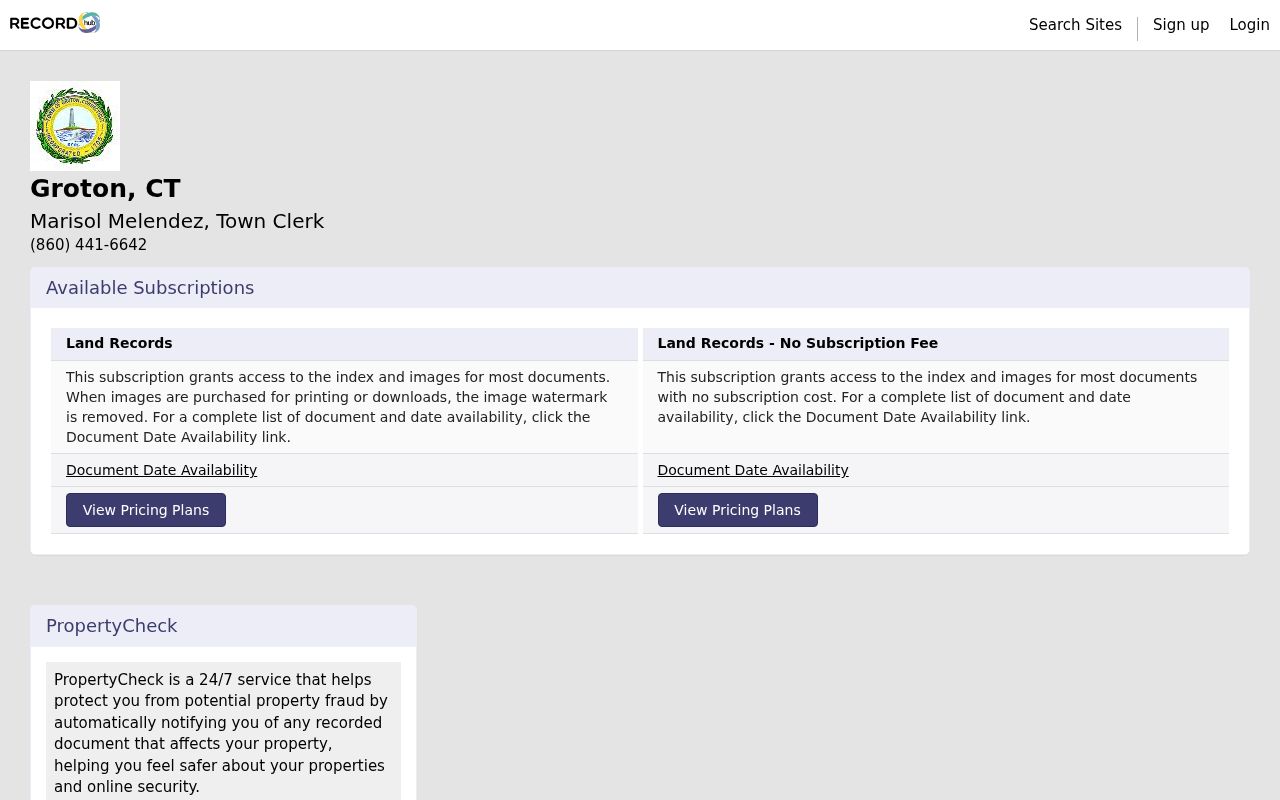
The image is a portal reference, not a certified title result. Read the record and retain its details before moving to the seller's prior deed.
The address-to-owner-to-deed movement is deliberate. Follow it in order:
- Copy the current card's location, parcel or account number, owner fields, deed book and page, and legal municipality.
- Open the Town Clerk or RecordHub land-record index and locate the current owner's purchase instrument.
- Read the grantor and grantee names, document date, legal description, map reference, and prior chain reference shown by the record.
- Search the seller's name as grantee to find that seller's own purchase, then compare the legal description and parcel lead.
- Repeat backward. For 1940 through 1961, ask the clerk whether an index, scan, or paper book is available; for earlier records, preserve the pre-1940 digitization gap.
- Grantor and grantee
- The grantor transfers an interest; the grantee receives it. The seller on one deed may be the grantee on the prior deed.
- Chain of title
- The linked sequence of recorded transfers from one deed to the next. It tracks title evidence, not household members.
- Legal description
- The recorded land description, often tied to a map or survey. It is stronger for old records than a changed street label.
Groton Previous Residents and Land Limits
Connecticut has no operating county recorder layer. New London County supplies regional geography, courts, historical collections, and newspaper context, but a Groton deed, mortgage, lien, map, or trade name begins with the Groton Town Clerk. The current land page says online records run from 1962 to the present and are also available in person at Town Hall. Older paper-book questions belong with the local custodian.
The Groton Town Clerk land-record page is the public starting point for that access route.
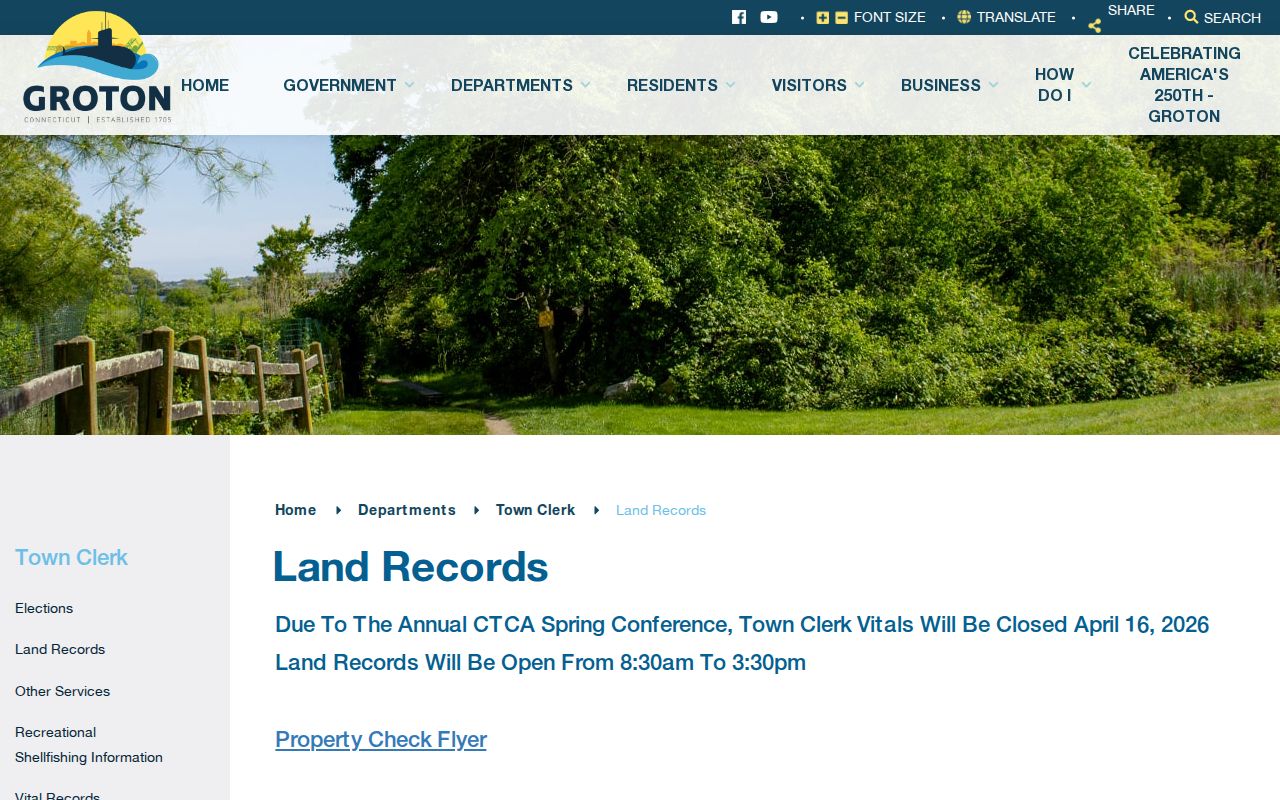
RecordHub describes the Town Clerk organization at 45 Fort Hill Road, phone 860-441-6642. It displays document-date availability, PropertyCheck, pricing plans, notifications, and request options. Note whether a result came from an index, image, paper book, or clerk-assisted request.
Note: A property-card deed book and page is a lead, so confirm the instrument in the Town Clerk record before calling an owner a past resident.
Pair Past Groton Households with Census Years
Directories and census schedules answer related but different questions. A directory may place a name at a street in its publication year; a census schedule records a household on a census date and in a geographic unit. Pair close dates, but do not treat a directory listing as a census result or a census absence as proof that an address had no earlier household.
- Choose the target year and write the exact address, postal label, and historic place name as printed.
- Read the closest directory entry and save the name, spouse or relation, occupation or business descriptor, address, telephone when printed, volume year, and page.
- Match that year to the census schedule used for the family-history question, keeping the census geography separate from the street label.
- Use the address-order section or reverse method to test spelling changes and neighboring entries, then compare the deed chain only for ownership.
- Check The Day, regional newspaper indexes, NLCHS holdings, cemetery notes, or a probate lead when a move, death, or family link needs another source.
The Groton library lists The Day microfilm for 1881-1896 and 1937-present. NLCHS lists marriage and death indexes for 1758-1866 and newspapers from 1758-1904. A notice can confirm a person or family was mentioned in a place and date, but it is not a full life record. A vanished directory entry may reflect a move, death, an unlisted household, a missing volume, or a changed place label. Record the source checked before choosing an explanation.
Note: “Not located in the inspected source” is the accurate result when a dated run, page, or index is incomplete.
Visual Clues for Groton Past Residents
Visual records can anchor a house history without identifying every person who used a building. The Connecticut State Library's WPA Architectural Survey covers 1934-1937 and describes about 5,000 Connecticut buildings through selected photos, sketches, and historical descriptions. Search for Groton, inspect the exact property card, and retain its item details. It does not establish that every Groton address appears.
The Connecticut WPA Architectural Survey collection is the right source for that check.
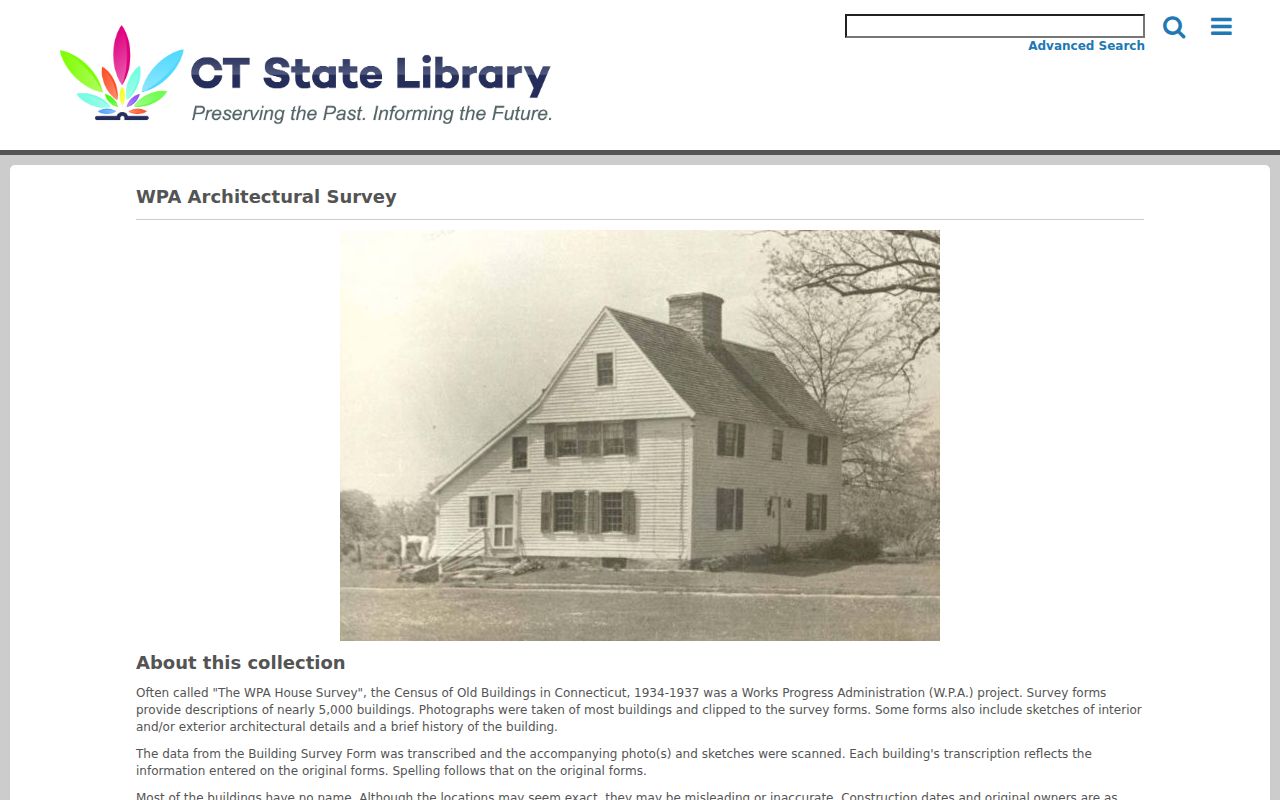
A 1934 Groton aerial, local photographs and postcards, and library scrapbooks can add road, shoreline, building, and neighborhood context. An aerial is not proof of ownership, and a photo is not proof of occupancy. Place each image beside its date and collection, then compare it with the deed or directory source supporting the claim.
Early land and municipal material may be in paper books, maps, microfilm, or manuscripts. Scanned records, GIS layers, property cards, and dynamic portals refresh on different schedules. Log the page, data, update, and retrieval dates so the snapshot can be checked later.
The Connecticut towns and counties guide helps keep Groton's legal town, postal place, and regional county context distinct.
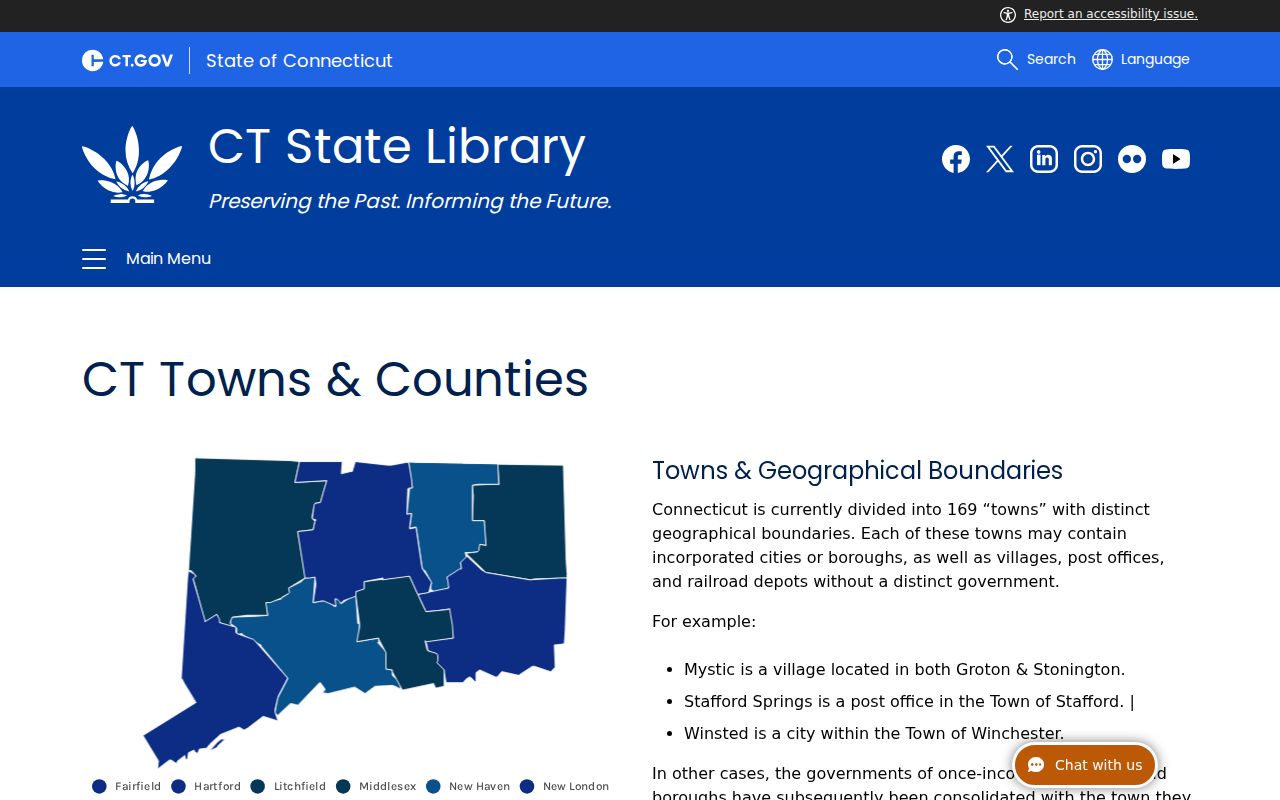
That distinction helps with Mystic, Noank, Groton Long Point, Old Mystic, and other older wording. The City of Groton has its own City Clerk and archive history, so a city record is not a Town Clerk land record.
Groton Previous Residents and Research Gaps
A careful search ends with its limits visible. GPL does not publish a complete directory shelf list or sample entry. Groton History Online was unavailable during the inspection. NLCHS requires a genealogy appointment at 860-443-1209, but its public page does not state a full schedule, reproduction terms, or item-level surname index. Ask for the run, publisher, page, and reproduction rule instead of guessing.
The same rule applies to a negative result. The Town Clerk window begins in 1962, the property-information quick start marks a pre-1940 digitization gap, and 1940-1961 needs a direct availability question. NARA's Mystic/Groton runs, NLCHS newspaper dates, and the WPA survey each describe only their own source. A missing year or name may reflect preservation, indexing, coverage, or spelling.
Lawful house history. Research about people connected to a Groton address is appropriate for family history, genealogy, and personal curiosity. Do not use a record to stalk, harass, track, or harm a living person. Keep only the detail needed for a lawful question, and confirm sensitive modern facts with the responsible custodian.
Name what each source proves: a deed records a transfer, a directory places a name in a dated entry, a census describes an enumeration, and an image adds context. That makes the Groton house history easier to check.